Guide · Operations
How to manage a hand car wash queue on a busy day
A hand car wash queue runs smoothly when every car is recorded the moment it arrives, every car has one clear stage — waiting, washing, hoovering, polishing or ready — and the whole crew can see those stages and how long each car has waited. Most queue problems come from cars that nobody wrote down, jobs that only one person knows about, and customers who have to ask.
By the POS4CarWash team · Updated
1. One way in for every car
Decide that no car is touched until it has been booked in — the registration, the wash and any extras. It sounds like extra work, but a car without a record is the one that gets missed, the one that gets the wrong service, and the one whose money never reaches the till.
Make booking in fast enough that nobody is tempted to skip it: scanning the plate or typing it into a phone takes seconds, and a regular's usual wash can be picked for them.
2. Give every car one clear stage
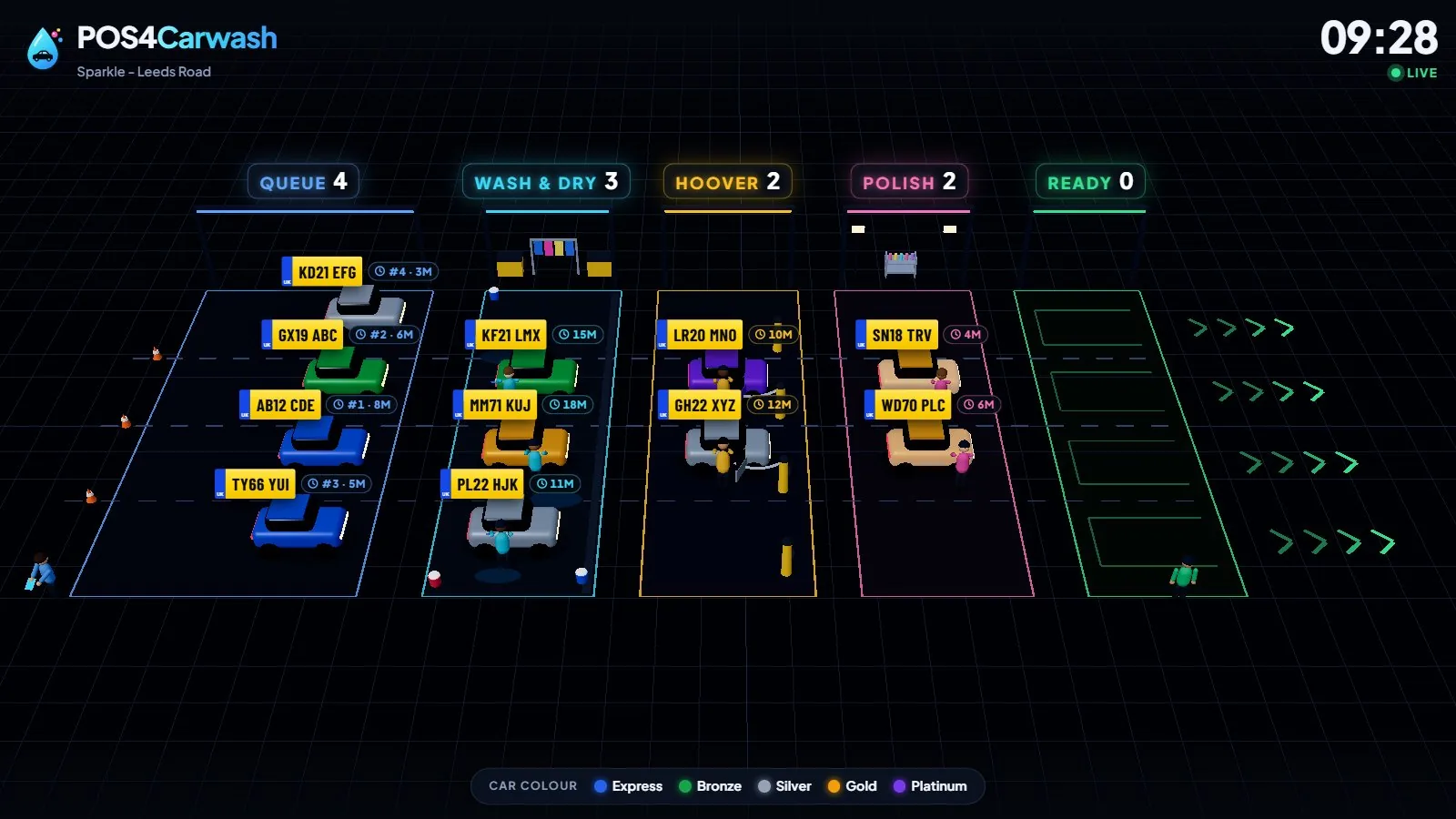
Agree a short list of stages that match how your bays work — for most hand car washes that's waiting, Wash & Dry, Hoover, Polish and Ready — and move each car from one to the next as the work is done. A car is only ever in one stage, so nobody has to ask what's happening to it.
- Waiting — booked in, not started
- Wash & Dry — outside wash and drying
- Hoover — interior, if the wash includes it
- Polish — if the wash includes it
- Ready — finished and waiting to be paid for and collected
3. Make waiting times visible
The car that has waited longest is the one that turns into a complaint. Show how long each car has been on site where the crew can see it — on a TV in the bay or on the managers' phones — so the oldest job is obvious without anyone keeping track in their head.
4. Answer customers before they ask
How much is it, how long will it be, and is mine done? Those three questions pull washers away from cars all day. Put prices on a sign or a QR code, give a realistic wait when the car is booked in, and if you can, let customers follow their own car on their phone.
5. Close every car with a payment
A car leaves the queue when it is paid for, and the payment is recorded then and there as cash or card. That way the queue, the takings and the end-of-day count all agree — see the cashing-up guide for the rest of that routine.
Doing it without paper
A whiteboard or a book of tickets can run a quiet day, but they don't show waiting times, don't follow cars between bays and don't add up the money. POS4CarWash does each of the steps above on the phones and TV a car wash already has: scan the plate, move the car through its stages, show the live board and record the payment.
Questions and answers
What's the best way to keep track of cars at a hand car wash?
Record every car by registration when it arrives, give it one stage at a time (waiting, wash, hoover, polish, ready), and show those stages where the whole crew can see them, such as a TV board.
How do I stop customers asking if their car is ready?
Give a realistic wait when they book in and, if possible, let them follow their car's progress on their own phone — for example by scanning a QR code on the forecourt.
Read next
- Live TV queue boardPut every car on site on a TV: which bay it's in and how long it has waited. Updates itself as the crew work. Shows work, never money.
- Customer QR check-inDrivers scan your forecourt QR code, choose a wash and follow their car's progress on their own phone — while your crew keep washing.
- Cashing upA simple end-of-day routine for hand car washes: record every sale as it's taken, keep cash and card apart, log voids and check the till against a known figure.